Lawyers for Lawyers joins the undersigned legal and human rights organisations in expressing grave concern regarding the arbitrary detention, solitary confinement and ongoing prosecution of renowned human rights barrister Chow Hang- tung under Hong Kong’s National Security Law for her role in organising the peaceful Tiananmen vigil in 2020-21. These actions constitute serious violations of international human rights law and standards, and we call for her immediate and unconditional release.
Background: a history of harassment for legitimate human rights work
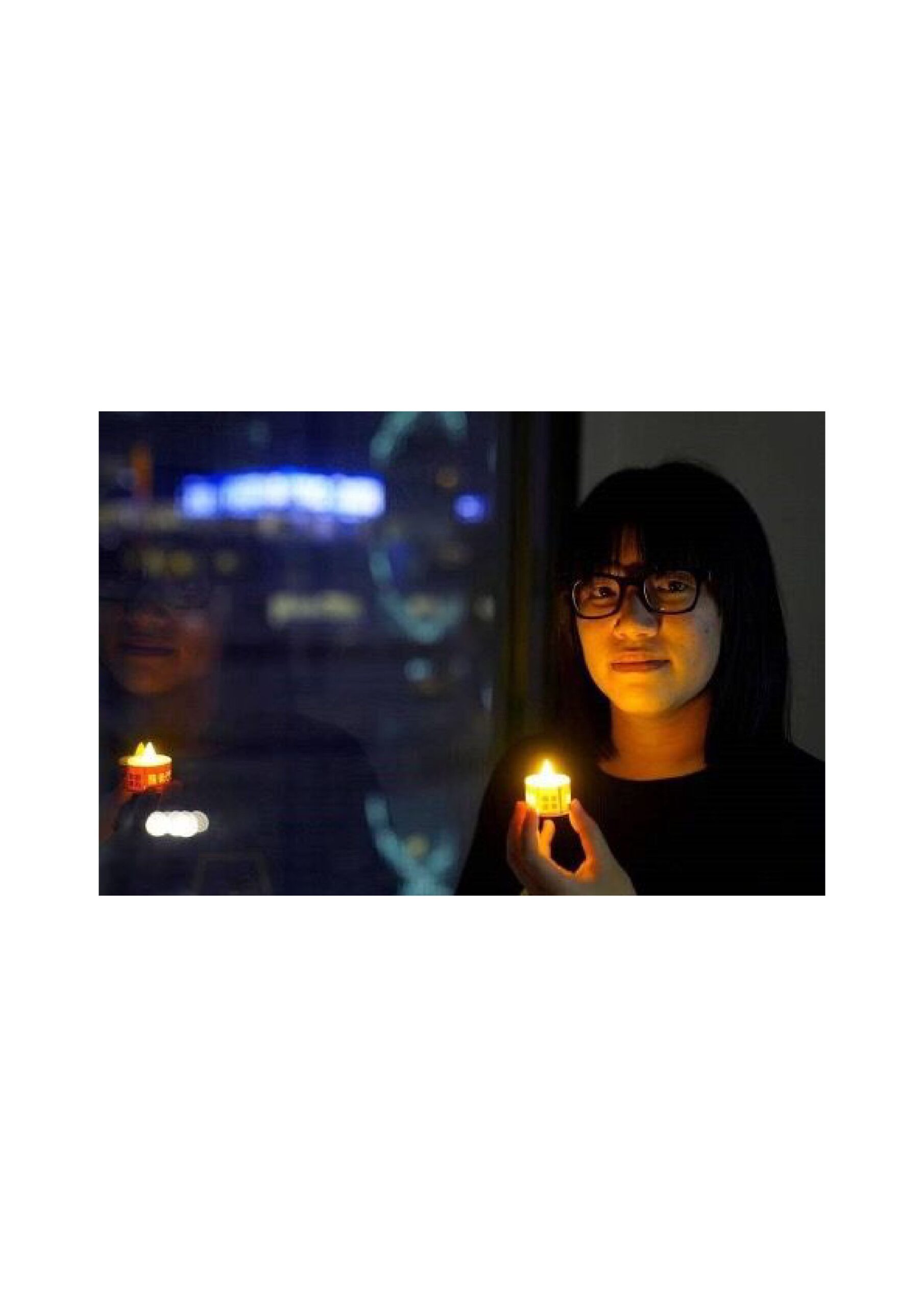
Chow Hang-tung is a human rights barrister and former vice-chairperson of the now- disbanded Hong Kong Alliance in Support of Patriotic Democratic Movements of China. For 30 years, the group organised annual peaceful vigils in Hong Kong to remember those killed in the 1989 Tiananmen crackdown in Beijing. Authorities banned the vigils in 2020 citing corona-virus restrictions, though many observers view the ban as part of a broader effort to silence dissent.
The summer of 2020 also saw the imposition of the National Security Law (NSL) for Hong Kong by the Standing Committee of the National People’s Congress (NPCSC) of China, bypassing Hong Kong’s legislature. The NSL criminalises any act of secession, subversion, terrorism and collusion with foreign forces in Hong Kong. Since the introduction of the NSL, Chow Hang-tung has been subjected to extensive harassment, multiple arrests, prolonged pre-trial detention and periods of solitary confinement by the authorities for her legitimate human rights work. The timeline of these actions is as follows:
Hang-tung was initially arrested on 4 June 2021 for “promoting an unauthorised assembly” on the 32nd anniversary of the protests. She was released on bail the next day, before being arrested again on 30 June 2021. She was granted bail again on 5 August 2021 but was re- arrested on 8 September 2021 after the Hong Kong Alliance rejected a demand by police to surrender information regarding allegations that the Alliance was an “agent of foreign forces”. She has been detained since then.
On 9 September, Hang-tung was charged alongside colleagues Albert Ho and Lee Cheuk Yan with “inciting subversion of state power” under the NSL. The court rejected her bail application, and on 13 December, she was sentenced to 12 months imprisonment for her involvement in planning the 2020 peaceful vigil.
On 4 January 2022, she was sentenced to further 15 months for her role in planning the 2021 peaceful vigil. On 14 December 2022 Hang-tung won an appeal to overturn the 15- month sentence, with the
court deeming the police ban unlawful. Despite having served her initial 12-month sentence, she was not released and in 2023 the UN Working Group on Arbitrary Detention determined her detention to be
arbitrary. During this period, the government appealed the appeal court’s decision and Hang-tung’s acquittal was overturned on 25 January 2024.
In 2024, the government enacted further national security legislation under Article 23, ‘Safeguarding National Security Ordinance’. Chow Hang-tung was
among the first to be targeted under this law, with new charges brought against her on 28 May 2024 for social media posts regarding a “sensitive date”, the Tiananmen Square anniversary that the authorities deemed as “inciting hatred” against Beijing.
Our organisations are concerned that Chow Hang-tung’s detention and charges are related to exercising her right to freedom of expression and professional duties as a lawyer. We believe that the charges against her lack legitimacy as they are based on an unlawful ban on the freedom of assembly designed to silence dissent, rendering her arrest and detention arbitrary.
Prolonged pre-trial detention and repeated solitary confinement
Chow Hang-tung has spent more than four years in pre-trial detention. Her trial finally began on 22 January 2026 and is expected to last 75 days. As a barrister, she is
representing herself and has pleaded not guilty to all charges. She persistently applies for bail and to lift media restrictions on her case, resisting the secrecy around national security cases.
Reports outline that Chow Hang-tung is currently, or was previously, subjected to unlawful and prolonged solitary confinement. We are aware that she often faces solitary confinement following actions of expression, such as drafting an acceptance statement for the CCBE Human Rights Award and undertaking a hunger strike to commemorate the Tiananmen crackdown while in detention. Our organisations are therefore concerned that solitary confinement is being used as a reprisal, in violation of international law, punishing Chow Hang-tung for exercising her right to freedom of expression and for her legitimate work as a lawyer representing herself.
Hong Kong’s Prison Rules allow two forms of solitary confinement. Rule 63 permits up to 28 days as punishment for disciplinary offences. Rule 68B allows administrative isolation for up to one month for unclear reasons. Both fall short of international human rights law and standards. Unlawful use of prolonged solitary confinement can amount to torture and is prohibited by the
United Nations Convention against Torture and Other Cruel, Inhuman or Degrading Treatment or Punishment (UNCAT), to which China is a party, and the
International Covenant on Civil and Political Rights (ICCPR), to which China is a signatory. In 2016, the UN Committee against Torture
urged the Hong Kong authorities to reduce the maximum length of solitary confinement and limit its use.
Criminalisation under the National Security Law and National Security Ordinance
The NSL has raised significant concerns about the state of the rule of law, fair trial rights and judicial independence in Hong Kong:
- The crimes of secession, subversion, terrorism, and collusion with foreign powers, which carry maximum sentences of life imprisonment, are vaguely defined, particularly in terms of what constitutes a grave or minor offence.
- The law has broadly worded extra-territorial application for actions committed by persons who are not residents in Hong Kong.
- Restrictions on defence counsel on the grounds of secrecy may not be compatible with a defendant’s right to prepare an adequate defence.
- The Office for Safeguarding National Security has wide discretion to assume jurisdiction over certain cases and its decisions are not subject to review by the Hong Kong courts.
- Cases under the law may only be heard by judges who are on a list designated by the Chief Executive of Hong Kong, and judges can be removed from that list if their actions or statements are deemed to endanger national security.
The imposition of Article 23 of the ‘Safeguarding National Security Ordinance’ has also been widely criticised. It is seen as a harsher version of the NSL and introduces a vague and overbroad concept of national security that covers finance, the military, economy and cybersecurity. This article appears to be criminalising general commentary that is seen as critical of Hong Kong. The UN High Commissioner for Human Rights has expressed
concern that the vague provisions “could lead to the criminalization of a wide range of conduct protected under international human rights law, including freedom of expression, freedom of peaceful assembly, and the right to receive and impart information.”
Chow Hang-tung’s prosecution under these laws demonstrates how broad and vague provisions are being used to crackdown on dissent and target lawyers for their legitimate legal work and exercise of their freedom of expression.
Contravention of international legal standards
The measures taken against Chow Hang-tung contravene multiple international laws and standards that safeguard the independence of lawyers and protect freedom of expression, including articles 14 and 19 of the ICCPR which is binding in Hong Kong under the Basic Law and Bill of Rights Ordinance. According to Article 16 of the
UN Basic Principles on the Role of Lawyers, governments should “ensure that lawyers (a) are able to perform all of their professional functions without intimidation, hindrance, harassment or improper interference; (…) and (c) shall not suffer, or be threatened with, prosecution or administrative, economic or other sanctions for any action taken in accordance with recognised professional duties, standards and ethics”. Moreover, Article 23 of the Basic Principles provides that: “Lawyers like other citizens are entitled to freedom of expression, belief, association, and assembly. In particular, they shall have the right to take part in public discussion of matters concerning the administration of justice and the promotion and protection of human rights.”
The undersigned organisations urge the relevant authorities to:
- Immediately and unconditionally release Chow Hang-tung and drop all charges against her related to her legitimate professional duties and exercising her right to freedom of expression and peaceful assembly.
- If criminal prosecution continues, ensure that Chow Hang-tung’s fair trial rights are protected in compliance with constitutional guarantees and applicable human rights law.
- Pending her release, halt the practice of imposing prolonged solitary confinement, especially as a punishment for exercising the right to freedom of expression, peaceful assembly, and conducting legitimate professional duties.
- Review and amend the current Hong Kong Prison Rules to ensure full compliance with international standards.
- Repeal or amend all laws that erode the rule of law, judicial independence and fair trial rights in Hong Kong, including the NSL and Article 23, to bring them in line with international human rights standards.
- Halt all acts of intimidation and harassment against legal professionals in Hong Kong, so they can carry out their duties free from undue interference or retaliation.
Our organisations will continue to monitor the situation of Chow Hang-tung as well as other members of the legal profession and human rights defenders in Hong Kong.
Signatories
Law Society of England and Wales
Lawyers’ Rights Watch Canada
Asian Lawyers Network
China Change
Lawyers for Lawyers
Council of Bars and Law Societies of Europe (Conseil des Barreaux Européens, CCBE)
International Bar Association’s Human Rights Institute (IBAHRI)
Find the PDF version of this statement here