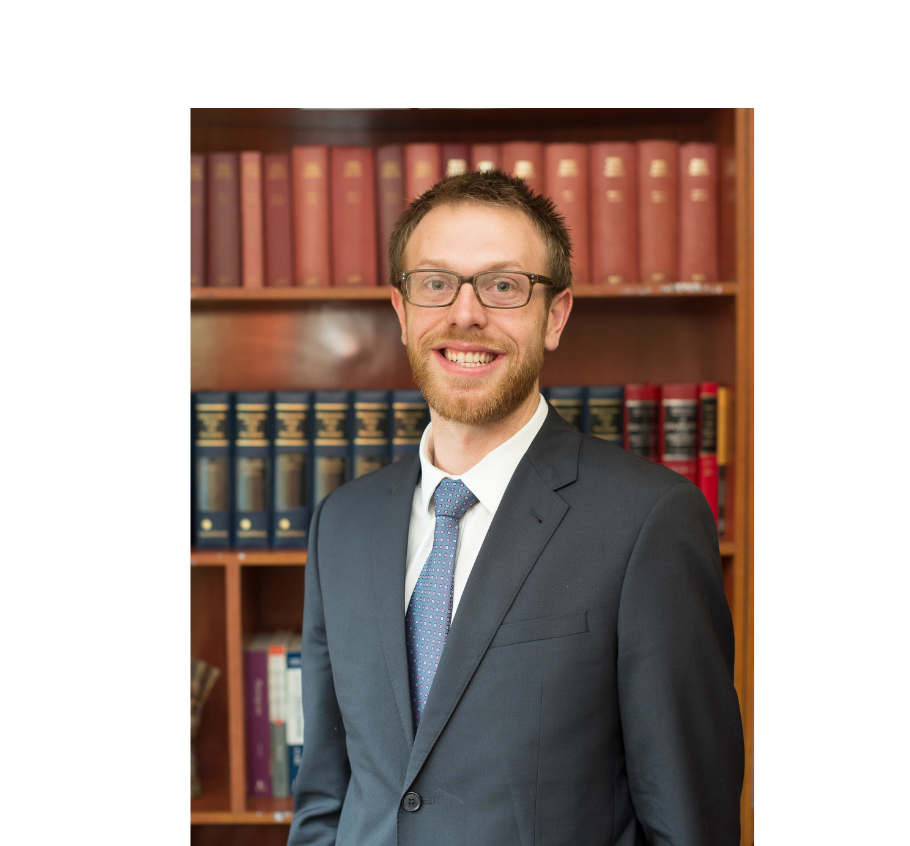
Lawyers for Lawyers joins the undersigned organisations in condemning the violence and intimidation against human rights lawyer Douglas Coltart at a public hearing on Constitutional Amendment Bill No. 3, held at the City Sports Centre in Harare on 31 March 2026. The refusal of the organisers to allow Mr Coltart and others opposed to the amendments to speak during the proceedings, his violent removal from the venue, and subsequent threats constitute a violation of his personal and professional right to freedom of expression, to bodily integrity and to carry out his professional duties without intimidation or reprisal.
We have been informed that Mr Coltart attended the public hearing with several individuals, who were all prevented from expressing their views on the Constitutional Amendment Bill. The Bill seeks to increase the President’s control over judicial appointments by removing public participation in the process, assigning almost all power to the President to appoint judges, undermining judicial independence. The amendments would also increase the President’s control over the upper house of Parliament by adding 10 unelected Senators appointed by the President; abolish presidential elections and allow Parliament to select the President; extend the President and Parliament’s terms and allow the current President and members of parliament to benefit from the changes, remaining in power until (at least) 2030; increase the President’s control over elections by removing key electoral functions from the Zimbabwe Electoral Commission; and abolish independent commissions that support democracy.
During the public hearing on 31 March, it appeared that those opposed to the Bill were systematically prevented from speaking to voice their concerns. The individual holding the microphone reportedly appeared to selectively choose who could speak, while others who attempted to access the microphone were physically blocked, pushed, and assaulted by a group of young men surrounding the microphone holder. Mr Coltart recorded videos of some of these incidents and other irregularities during the hearing using his mobile phone, before a group of men gathered around their bay, chanting and acting in a threatening and intimidating way. As Mr Coltart attempted to leave, he was reportedly attacked by an individual from behind, his phone was stolen and he was pushed to the ground. As he attempted to retrieve his phone, he was attacked by a group of men who physically assaulted him, shouted abusive language and ultimately helped the individual to retain the phone and hand it to another accomplice. In this way, the incident appears coordinated.
We have received reports about attempts to gain access to the phone since it was stolen. Our organisations are concerned that the seemingly coordinated attack and theft of Mr Coltart’s phone, which contains evidence of the irregularities during the hearing as well as privileged information and communications related to his clients and legal work, risk breaching lawyer-client confidentiality.
We are also concerned by threats issued against Mr Coltart by a group called ‘Presidential Mafia Edutainers 4ED’, including a video shared on social media that uses dehumanising language and threatens physical violence if he continues to oppose the Constitutional Amendment Bill. We are also aware of similar threats and violent attacks against other prominent lawyers and political figures opposed to the amendments. It therefore appears that the repression and intimidation experienced during and since the hearing are aimed at stifling dissent and preventing free speech, including by legal professionals in relation to matters of law and the administration of justice, protected under international human rights law. It also contributes to a chilling effect, deterring other lawyers and rights defenders from speaking out for fear of retaliation.
Since 2019, Mr Coltart has faced repeated harassment, assaults, spurious legal charges and detention in the course of his professional duties.
- On 27 April 2019, Mr Coltart was arrested and charged with participating in a gathering with intent to commit public violence for his role in a meeting of teachers from a trade union he represents; he was tried and acquitted.
- On 23 August 2019, Mr Coltart was assaulted and charged with ‘criminal nuisance’ while representing a teachers union seeking to deliver a petition to the government; he was eventually acquitted after spending over a year on remand.
- On 23 November 2019, he was violently assaulted by officers while trying to get access to his client at Harare Central Police Station; he was initially charged and detained, but later released and the charges were dropped.
- On 21 July 2020, Mr Coltart was again arrested and detained for questioning the legality of a police raid on a clients’ residence, before being released without charge.
- On 22 October 2022, he was arrested and charged with fraud in connection with the exercise of his duties as a lawyer; he was released the same day and charges were eventually dropped.
- On 4 September 2023, Mr Coltart was arrested for questioning the legality of police officers’ attempt to forcibly interview a hospitalised client who was a victim of torture; he was detained overnight and charged with obstructing the course of justice, but charges were eventually dropped.
The pattern of harassment to which Mr Coltart has been subjected prompted a communication on 9 December 2022 from five UN mandates to the Zimbabwean Government raising concerns about his treatment [1]. The mandates expressed particular concern that the repeated actions against Mr Coltart may be a form of retaliation for his legitimate work as a human rights lawyer, therefore violating not only his personal and professional rights, but also those of his clients. They also underlined how the lack of investigation, disciplinary actions and overall lack of accountability of security forces agents involved in the incidents may contribute to a chilling effect on other legal practitioners and generally on the exercise of the legal profession and human rights defenders.
An alternative report to the UN Human Rights Committee’s review of Zimbabwe’s implementation of the International Covenant on Civil and Political Rights (ICCPR), submitted by some of the signatory organisations in February 2025, sets out concerns regarding the independence of the judiciary, interference with lawyers’ activities, and restrictions on the right to an effective defence. It highlights the increasing political influence over judicial appointments prior to the Constitutional Amendment Bill No. 3, the intimidation and harassment of judicial officers, and instances of corruption that compromise the impartiality of Zimbabwe’s legal system and erode public trust in the judiciary. Furthermore, it details the harassment, threats, and arbitrary prosecutions faced by lawyers, particularly those involved in politically sensitive cases, and underscores the legal and administrative obstacles preventing lawyers from accessing their clients, including cases of incommunicado detention, surveillance, and breaches of lawyer-client confidentiality.
In its concluding observations following the review, the Human Rights Committee expressed concern about the intimidation of judges who issue rulings unfavourable to the government and urged the state to eradicate all threats, intimidation and other undue influence on the judiciary by the executive branch and to ensure in law and in practice the full independence and impartiality of judges, including transparent and impartial procedures for their selection and appointment [2].
In this context, the undersigned organisations are deeply concerned about the proposed amendments to the Zimbabwean Constitution which seek to further erode constitutional safeguards of judicial independence and undermine the separation of powers and democratic process. The obligation to protect judicial independence and lawyers’ freedom to practise, freedom of expression and lawyer-client confidentiality are set out in international treaties to which Zimbabwe is a party, including the ICCPR and African Charter on Human and People’s Rights, as well as the UN Basic Principles on the Independence of the Judiciary, UN Basic Principles on the Role of Lawyers, and the Zimbabwean Constitution.
Our organisations call on Zimbabwean authorities to conduct a prompt and independent investigation into the actions against Mr Coltart and take all necessary measures to ensure his safety and the return of his phone; cease all harassment and improper interference with lawyers and judges in the course of their professional duties, including exercising their right to freedom of expression; take all necessary measures to ensure lawyers can perform their professional functions without intimidation, hindrance, harassment or fear of reprisals, and guarantee their physical and psychological integrity; ensure that lawyers’ right to freedom of expression is respected and safeguarded, including when they speak out on issues related to the justice system, human rights and the rule of law; and respect the principle of lawyer-client confidentiality, halt any attempts to access privileged information and refrain from monitoring privileged exchanges between lawyers and clients.
We will continue to monitor the situation for Douglas Coltart, as well as other lawyers and the independence of the legal profession in Zimbabwe.
Signatories
The Law Society of England and Wales
International Association of People’s Lawyers (IAPL)
Day of the Endangered Lawyer Foundation
Council of Bars and Law Societies of Europe (Conseil des Barreaux Européens, CCBE)
Lawyers for Lawyers (L4L)
European Association of Lawyers for Democracy and World Human Rights (ELDH)
Progressive Lawyers’ Association (ÇHD), Turkey
Haldane Society of Socialist Lawyers
International Association of Russian Advocates
Geneva Bar Association
International Observatory of Lawyers at Risk (OIAD)
New York City Bar Association
International Bar Association’s Human Rights Institute
Bar Human Rights Committee of England and Wales (BHRC)
Lawyers for the Rule of Law, United States
[1] Ref.: AL ZWE 3/2022, 9 December 2022. Available at https://spcommreports.ohchr.org/TMResultsBase/DownLoadPublicCommunicationFile?gId=27723.
[2] UN Human Rights Committee, Concluding observations on the second periodic report of Zimbabwe, 6 May 2025, CCPR/C/ZWE/CO/2, paras. 41-42.
Read the PDF version of this statement here