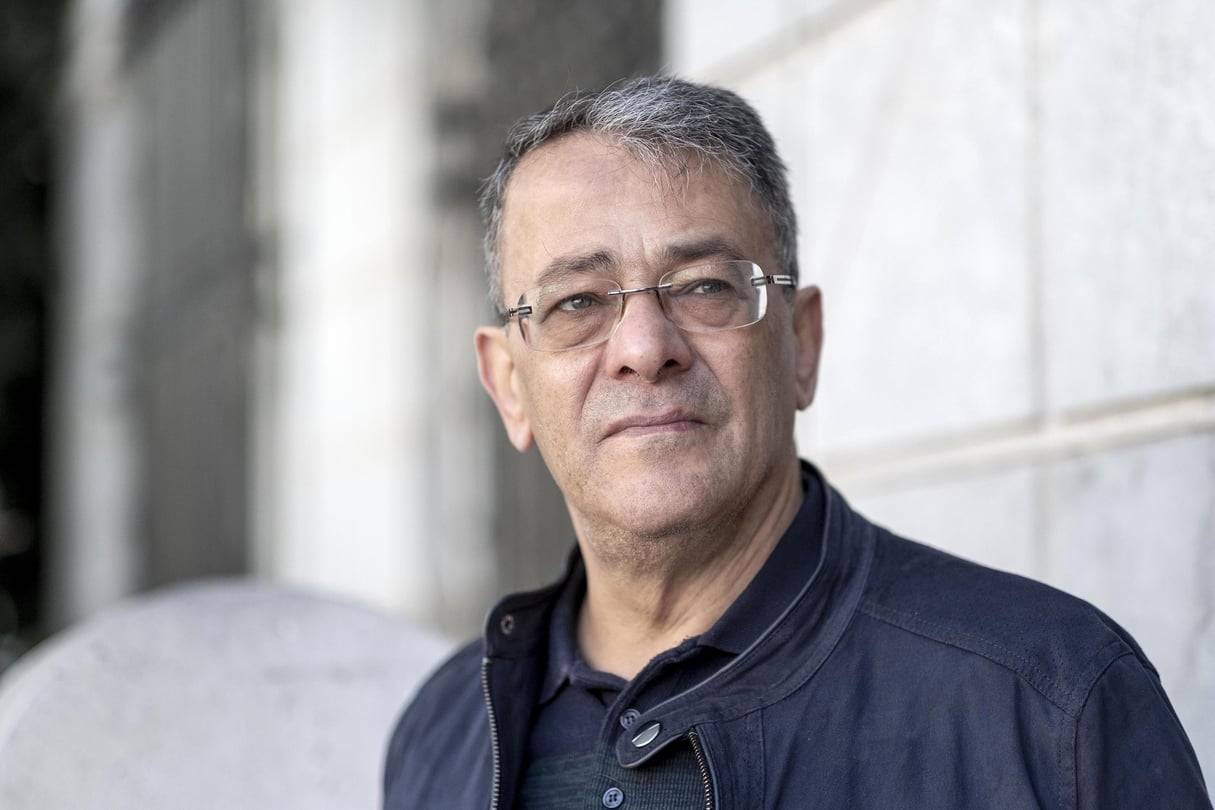
Download the statement in English or French.
The undersigned organisations strongly condemn the arbitrary arrest and subsequent conviction of Tunisian lawyer Ahmed Souab and call for his immediate release and measures to ensure the conviction is set aside, ahead of the second hearing in his appeal. His prosecution and sentencing constitute a grave violation of his right to freedom of expression and to carry out his professional duties without intimidation or reprisal.
A former judge of the Tunis Administrative Court, Ahmed Souab is a prominent lawyer and human rights defender and one of Tunisia’s most respected jurists and legal minds known for his outspoken defence of fair trials and judicial independence. In 2025, he received the Ebru Timtik Award for his outstanding commitment and sacrifice for fair trial rights and was described by the independent jury as “a man whose entire career has been devoted to the fight for justice and the protection of human rights”.[1]
Ahmed Souab was arrested on 21 April 2025 following a press conference three days earlier outside the Tunis Court of First Instance, on the conclusion of the “conspiracy trial” which saw sentences ranging from 4 to 66 years in prison for dozens of public and political figures. Having acted as defence counsel for some of the accused, Mr Souab’s remarks referred to the lack of due process which characterised the trial and warned that judges in the case were acting under pressure from the executive. His comments have been echoed by the UN High Commissioner for Human Rights who described the process as “marred by violations of fair trial and due process rights, raising serious concerns about political motivations” and “a setback to justice and rule of law”.[2]
Following his arrest, Mr Souab was held in incommunicado detention for 48 hours, denying him access to both his lawyer and his family members, pursuant to Organic Law No. 2015-26 on counter-terrorism, before he was presented to the investigative judge of the Judicial Pole for Counterterrorism in Tunis.
On 23 April 2025, he was charged with the offences of “forming a terrorist organisation”, “supporting terrorist acts”, and “threatening to commit terrorist crimes” under the counter terrorism law, as well as offences of “spreading fake news” and “insulting others or disturbing their comfort through public telecommunications networks” under Decree Law 2022-54 and the Telecommunications Code. Despite Mr Souab’s legal team appealing this decision, he was indicted under the above charges and referred to trial.
On 31 October 2025, the Tunis Court of First Instance convicted Mr Souab on charges of “forming and organising a terrorist group” and “spreading false information” under Organic Law No. 2015-26 and Decree Law No. 2022-54 respectively. Following a summary remote hearing which lasted only a few minutes, he was sentenced to five years’ imprisonment and three years of administrative control. Despite objections from interveners present in the courtroom, who argued that Mr Souab’s right to a fair trial and to a defence meant he should be entitled to choose his counsel, the Court disregarded these concerns and retired after approximately seven minutes to deliberate and deliver its decision.
Mr Souab will appear before the Court of Appeal on 12 February. His appeal represents a critical opportunity to uphold basic guarantees of due process, particularly in light of the absence of credible evidence and the manifestly disproportionate nature of the initial sentence. However, given the extraordinary speed of the first-instance proceedings and the relatively short timeframe in which the appeal hearing has been scheduled, our organisations are concerned that Mr Souab continues to face a serious risk of fair trial violations.
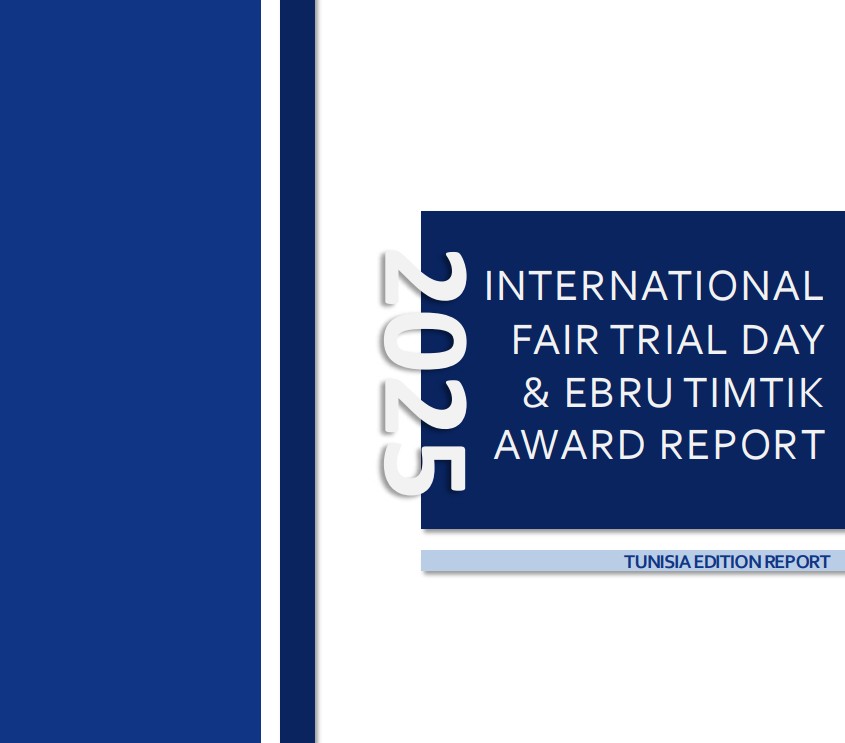
This week, the Steering Group for the International Fair Trial Day (IFTD) published its report on fair trial rights in Tunisia.[3] The report details systemic concerns including the rapid decline in judicial independence; obstacles to the right to defence; the targeting of lawyers, human rights defenders and journalists; and torture and ill-treatment in detention. It also sets out a series of recommendations for Tunisian authorities to improve judicial functioning, protect lawyers and combat impunity.
The obligation to protect judicial independence, the right to a fair trial, and lawyers’ freedom to practise and freedom of expression are set out in international treaties to which Tunisia is a party, such as the International Covenant on Civil and Political Rights and African Charter on Human and People’s Rights, as well as the UN Basic Principles on the Role of Lawyers and the Tunisian Constitution.
In reference to Ahmed Souab’s appeal and the broader recommendations set out in the IFTD report, our organisations call on Tunisian authorities to:
- Immediately and unconditionally release Ahmed Souab and other detained lawyers, end the unfounded legal proceedings against them, and take measures to ensure their convictions are set aside as they have been imposed in relation to the legitimate exercise of their professional rights and duties and they are in violation of their right to freedom of expression;
- Cease all harassment, arbitrary detention and wider persecution of lawyers, judges, human rights defenders and journalists who are exercising their professional rights and duties and exercising their freedom of expression;
- Respect the fundamental guarantees protecting the legal profession and ensure that lawyers are able to perform their professional duties and express themselves freely, without intimidation, harassment, or fear of reprisals;
- Repeal or fundamentally review Decree 54, the Telecommunications Code, Penal Code, Organic Law No. 2015-26 on counterterrorism and other laws to bring their definitions, procedures and detention powers into line with international human rights standards, including by prohibiting their use to criminalise peaceful expression or legitimate professional activities;
- Reinstate arbitrarily dismissed judges in compliance with the decisions of the Administrative Court; reinstate the High Council of the Magistrature (CSM); and take all necessary measures to enhance the independence of the judiciary and ensure impartial trials, free from political or executive interference, in conformity with international law.
We will continue to monitor developments relating to proceedings against Ahmed Souab, other lawyers, and the independence of the legal profession in Tunisia.
Signed:
Law Society of England and Wales
International Bar Association’s Human Rights Institute
Federation des Barreaux d’Europe / European Bars Federation
European Association of Lawyers for Democracy and World Human Rights
Progressive Lawyers Association
PEN Norway
Foundation Day of the Endangered Lawyer
Bar Human Rights Committee of England and Wales
International Observatory for Lawyers at Risk (OIAD)
International Association of Russian Advocates
Lawyers for Lawyers (L4L)
Republikanischer Anwältinnen- und Anwälteverein (RAV)
Avocats Sans Frontières (ASF)
Institute for the Rule of Law of the Union Internationale des Avocats (UIA-IROL)
Council of Bars and Law Societies of Europe (Conseil des Barreaux Européens, CCBE)
Défense Sans Frontière – Avocats Solidaires (DSF-AS)
Defense Commission of the Barcelona Bar Association
Association of Lawyers for Freedom (ÖHD)
[1] See International Fair Trial Day and Ebru Timtik Award 2025 – Tunisia Edition Report, p.19. https://iftd.org/wp-content/uploads/2026/02/Report_of_International_Fair_Trial_Day_-2025.pdf
[2] OHCHR, Tunisia: Türk says rulings in “conspiracy” case are a setback to justice and rule of law, 24 April 2025. https://www.ohchr.org/en/press-releases/2025/04/tunisia-turk-says-rulings-conspiracy-case-are-setback-justice-and-rule-law
[3] International Fair Trial Day and Ebru Timtik Award 2025 – Tunisia Edition Report, https://iftd.org/wp-content/uploads/2026/02/Report_of_International_Fair_Trial_Day_-2025.pdf