Lawyers for Lawyers (L4L), the Law Society of England and Wales (LSEW) and the International Bar Association Human Rights Institute (IBAHRI) are deeply concerned by the continued criminal prosecution, violation of fair trial rights and cumulative prison sentences imposed on lawyer Arnon Nampa for the peaceful exercise of his rights to freedom of expression and peaceful assembly. Ahead of the Court of Appeal judgment scheduled for 16 July 2026 in one of the lèse-majesté cases brought against him, we urge relevant authorities of the Kingdom of Thailand to ensure that the proceedings fully comply with Thailand’s obligations under international human rights law and that lawyers are able to carry out their professional duties free from intimidation, harassment, or undue interference.
Background: Arnon Nampa and the prosecutions against him
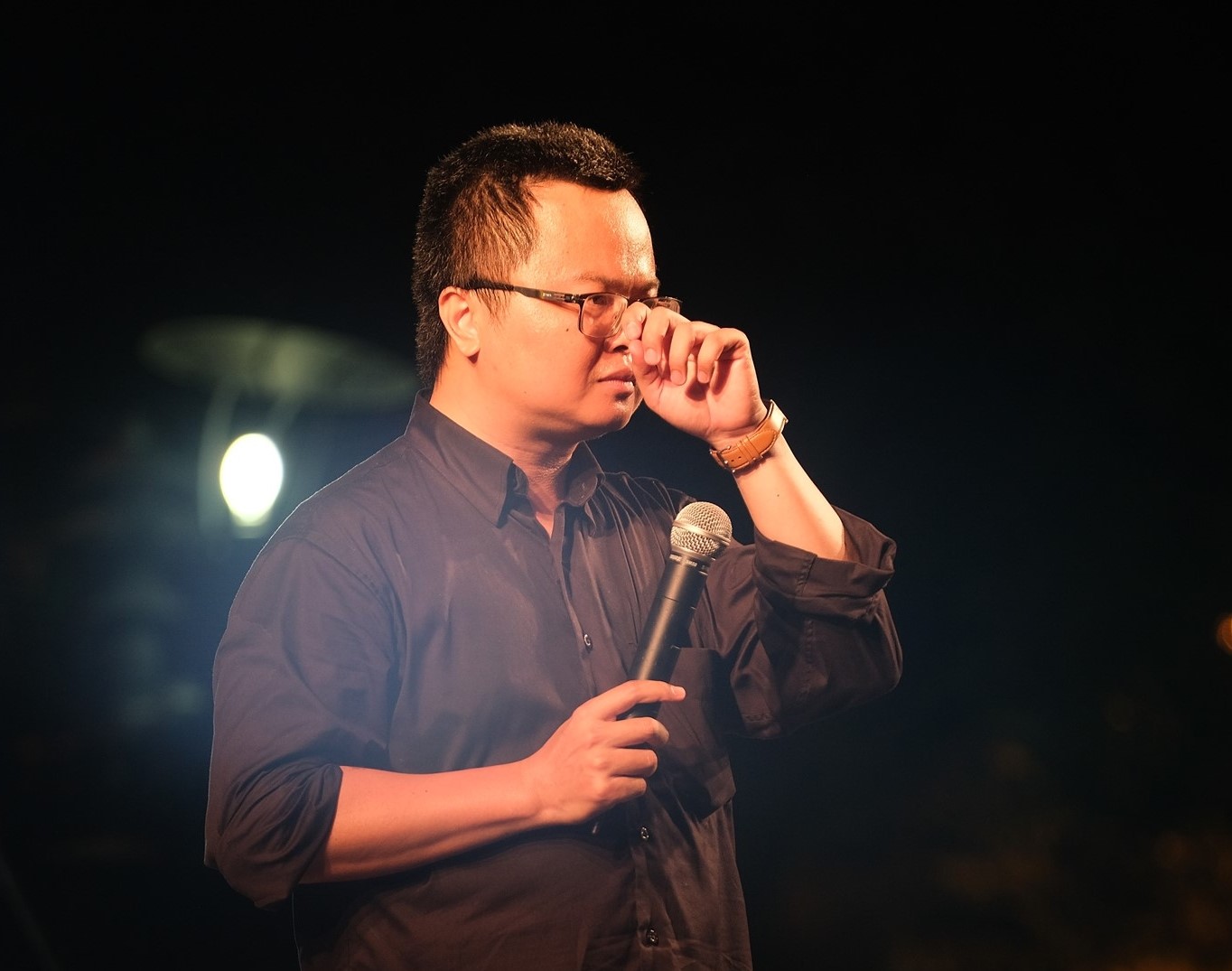
Arnon Nampa is a prominent Thai human rights lawyer and a founding member of Thai Lawyers for Human Rights (TLHR) who has dedicated himself to defending individuals charged under the lèse-majesté law, despite facing violations of his own rights and freedoms by state authorities as a result of his work. In addition to his legal practice, Mr Nampa has participated in public discussions concerning constitutional reform, democracy, and the role of the monarchy. He received the Front Line Defenders Award for Human Rights Defenders at Risk in 2025, and the Gwangju Prize for Human Rights in 2021 in recognition of his efforts to challenge the violent crackdown on protesters during Thailand’s political unrest. His public advocacy during Thailand’s 2020–2021 pro-democracy movement has resulted in numerous criminal proceedings, primarily under the controversial lèse-majesté law, which makes criticism of the monarchy punishable by up to 15 years in prison, equivalent to the penalty for manslaughter.
Mr Nampa currently faces a total of 38 criminal cases arising from speeches delivered during peaceful public assemblies and online expression advocating democratic reforms and reforms to the monarchy. Of those, 14 involve charges under the lèse-majesté law. Eleven cases have resulted in convictions, two remain pending before the Court of First Instance, and one remains at the prosecutorial stage. If the Court of Appeal upholds the conviction in the present case, his cumulative prison sentences will increase to 31 years, 9 months and 20 days.
The appeal hearing scheduled for 16 July 2026
The present proceedings arise from a speech delivered by Mr Nampa during a peaceful public assembly held in front of the Chiang Mai University Art Center on 23 November 2020. During the demonstration, he advocated democratic reform and reform of the monarchy while exercising his rights to freedom of expression and peaceful assembly.
On 27 March 2025, the Criminal Court convicted Mr Nampa under Section 112 of the Thai Criminal Code, finding that his speech constituted defamation of the King. The Court sentenced him to three years’ imprisonment, which was subsequently reduced to two years. The Court of Appeal is scheduled to deliver its judgment on 16 July 2026. Should the Court uphold the conviction, Mr Nampa will receive an additional two-year prison sentence.
Judicial harassment and misuse of Section 112
Mr Nampa’s prosecution forms part of a broader pattern of criminal proceedings brought against lawyers, human rights defenders, journalists, and pro-democracy activists under Section 112 of the Thai Criminal Code. The broad interpretation of Section 112 has increasingly been used to criminalise peaceful expression relating to the monarchy, restricting public debate and exposing individuals to lengthy criminal proceedings and substantial prison sentences for exercising their fundamental rights. In this context, the repeated prosecutions against Mr Nampa, the cumulative sentences imposed, and the persistent refusal to grant bail raise serious concerns that criminal proceedings are being used to deter legitimate human rights advocacy and participation in public debate. Prosecuting a lawyer for peacefully contributing to discussions on matters of public interest undermines the independence of the legal profession and creates a chilling effect on lawyers seeking to advance the rule of law and the protection of human rights.
Ongoing disbarment proceeding
In addition to the criminal proceedings, Mr Nampa has also been subjected to disbarment proceedings before the Lawyer Council of Thailand under Royal Patronage, which seek the revocation of his license to practice law in connection with a speech delivered during the protest on 3 August 2020. The complaint alleges that the speech was intended to incite unrest, disseminate false information and insult the monarchy. The proceedings, arising from Mr Nampa’s exercise of freedom of expression and peaceful assembly, have remained pending for more than five years and are currently under consideration by the Lawyer Council’s Professional Etiquette Committee.
Thailand’s international human rights obligations
Thailand is a State Party to the International Covenant on Civil and Political Rights (ICCPR) and is therefore legally obliged to guarantee the rights to liberty, a fair trial, freedom of expression, and peaceful assembly.
In Opinion No. 28/2024, the UN Working Group on Arbitrary Detention (WGAD) concluded that Mr Nampa’s deprivation of liberty is arbitrary, being in contravention of Articles 2, 7, 9, 11 and 19 of the Universal Declaration of Human Rights and Articles 2, 9, 14, 15, 19 and 26 of the ICCPR. The WGAD found that his detention lacks a legal basis, results from the exercise of his rights to freedom of expression, peaceful assembly and participation in public affairs, is tainted by serious violations of his fair trial rights, and is discriminatory on the basis of his political opinion.
Furthermore, the UN Basic Principles on the Role of Lawyers recognise the essential role lawyers play in upholding the rule of law and protecting human rights. Principle 23 provides that lawyers, like other citizens, are entitled to freedom of expression, belief, association and assembly. In particular, they have the right to take part in public discussion of matters concerning the law, the administration of justice, and the promotion and protection of human rights, without suffering professional restrictions or other reprisals because of their lawful actions or membership in a lawful organisation. The continued prosecution and detention of Mr Nampa are inconsistent with these internationally recognised standards.
Call to the authorities
Our organisations call on the authorities of Thailand to:
- Ensure that Arnon Nampa’s appeal proceedings fully respect his rights to due process and a fair trial, in line with both domestic law and international standards, including Article 14 of the ICCPR, and guarantee his right to bail pending trial in his cases, with any decision restricting his liberty based on an individualised assessment and in accordance with the principles of necessity and proportionality.
- Cease the judicial harassment and cri202minal prosecution of Arnon Nampa, as it unduly interferes with his legitimate activities as a lawyer and human rights defender, including the exercise of his right to freedom of expression.
- Bring the interpretation and application of Section 112 of the Thai Criminal Code into conformity with Thailand’s obligations under international human rights law.
- Ensure that all lawyers in Thailand are able to freely and independently conduct their professional activities and exercise their rights to freedom of expression, without fear of reprisals, in line with the UN Basic Principles on the Role of Lawyers.
Download the PDF version of the statement.