By Patrick Poon, Board Member, Asian Lawyers Network (ALN) in Tokyo, Japan
As the 11th anniversary of the 709 Crackdown on Chinese human rights lawyers is approaching on 9 July, we take Xie Yang’s case as an example of the peculiarity of criminal cases against human rights lawyers in China.
Xie Yang’s case: years of detention without due process
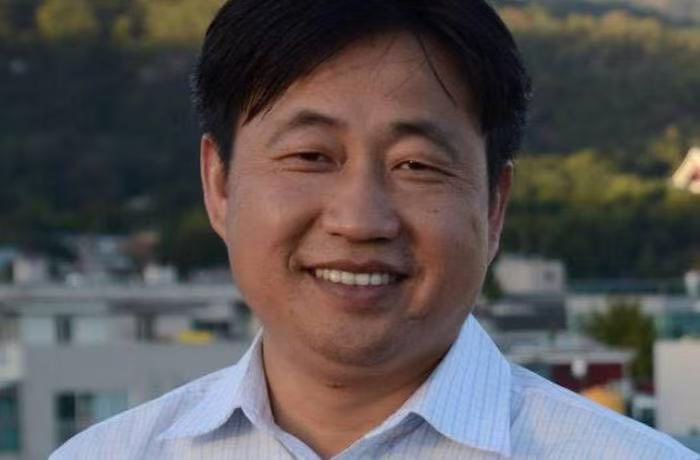
Chinese human rights lawyer Xie Yang was sentenced to five years imprisonment and 100,000 yuan (about USD 15,000) of his assets were confiscated on 23 March 2026. Before the trial and sentencing, he had already been detained for 1,531 days. Xie Yang’s case and many other cases of Chinese human rights defenders highlighted the absurdity of the criminal justice system in China, which is simply without any justice.
Xie Yang was detained on January 11, 2022. His family members were only informed about the arrest by the police six days later. He had been detained in a secret location until August that year when he was formally indicted for “inciting subversion of state power”, based on article 105 of the Criminal Law of the People’s Republic of China.
From January 2022 to August 2022, his lawyer was not allowed to meet him in the detention centre. His lawyer was also not allowed to attend his trial. His lawyer not only had difficulty to meet him at the Changsha City No. 1 Detention Center, she was also not allowed to read the legal bundles of his case. Procedurally, it entirely violated the requirements of the UN Basic Principles on the Role of Lawyers. For instance, according to article 5 of the Basic Principles on access to a lawyer of his own choice: “Governments shall ensure that all persons are immediately informed by the competent authority of their right to be assisted by a lawyer of their own choice upon arrest or detention or when charged with a criminal offence.” That should be the primary right of detainees. Without access to his lawyer for legal assistance, it would be difficult to ensure that he would not be tortured and subjected to extraction of confession through torture.
Article 7 of the Basic Principles also stipulate that the authorities should ensure that the detainee is allowed to meet a lawyer of their own choice within 48 hours of detention: “Governments shall further ensure that all persons arrested or detained, with or without criminal charge, shall have prompt access to a lawyer, and in any case not later than forty-eight hours from the time of arrest or detention.”
Rule by Law
The situation Xie Yang faced was very common among human rights lawyers and human rights defenders in China. Very often, the detention centre would claim that they could not allow the lawyers to meet their clients as that was the order from above. Criminal justice cannot be actualized in an authoritarian country like China as it only adopts the legal principle of “rule by law” but not “rule of law”. It is equally difficult to understand what it means by “inciting subversion of state power” by simply posting comments on social media. The offence is simply a draconian law always used by the police to crack down on dissidents. It was even more incomprehensible that Xie Yang was sentenced to the confiscation of 100,000 yuan worth of his assets solely for his WeChat posts and for giving interviews to foreign media outlets. How are his assets related to “incitement”? There are numerous corrupt officials in China. It is just an additional blatant attack on the freedom of expression on human rights defenders by imprisoning them and confiscating their assets.
The wider crackdown on human rights lawyers
While writing this article, human rights lawyer Yu Wensheng, who was also convicted of “inciting subversion of state power,” was finally released on 13 April and returned to Beijing to reunite with his wife and teenage son after completing his three years’ sentence. His wife had also been detained for one year and nine months and was only released in January 2025. They were both detained on 13 April 2023 in Beijing while they were on their way to meet with officials of the European Union. Meeting with diplomats is also considered as “subversion” by Chinese authorities. The absurdity reflects how the “incitement” offence is arbitrarily defined. Lawyers representing house church leaders are also targeted, harassed, and intimidated by the authorities, such as in the recent case of Zion Church as documented by US-based website “China Change”. Lawyers themselves have also become victims in such a legal system.
The crackdown spreads to Hong Kong
These repressive practices are now also extended to Hong Kong, the former British colony, as illustrated by the case of Apple Daily founder Jimmy Lai, who was sentenced to 20 years’ imprisonment. Another example is the case of the leaders of the disbanded Hong Kong Alliance in Support of Patriotic Democratic Movements of China that organized the annual candlelight vigil to commemorate the Tiananmen Crackdown, including the alliance’s vice-chairpersons Chow Hang-tung, a young barrister, and Albert Ho, the alliance’s secretary, a senior solicitor and a former chairperson of the disbanded Democratic Party of Hong Kong, who had been detained since September 2021 and had been tried in March 2026. They are due to be sentenced in July 2026.