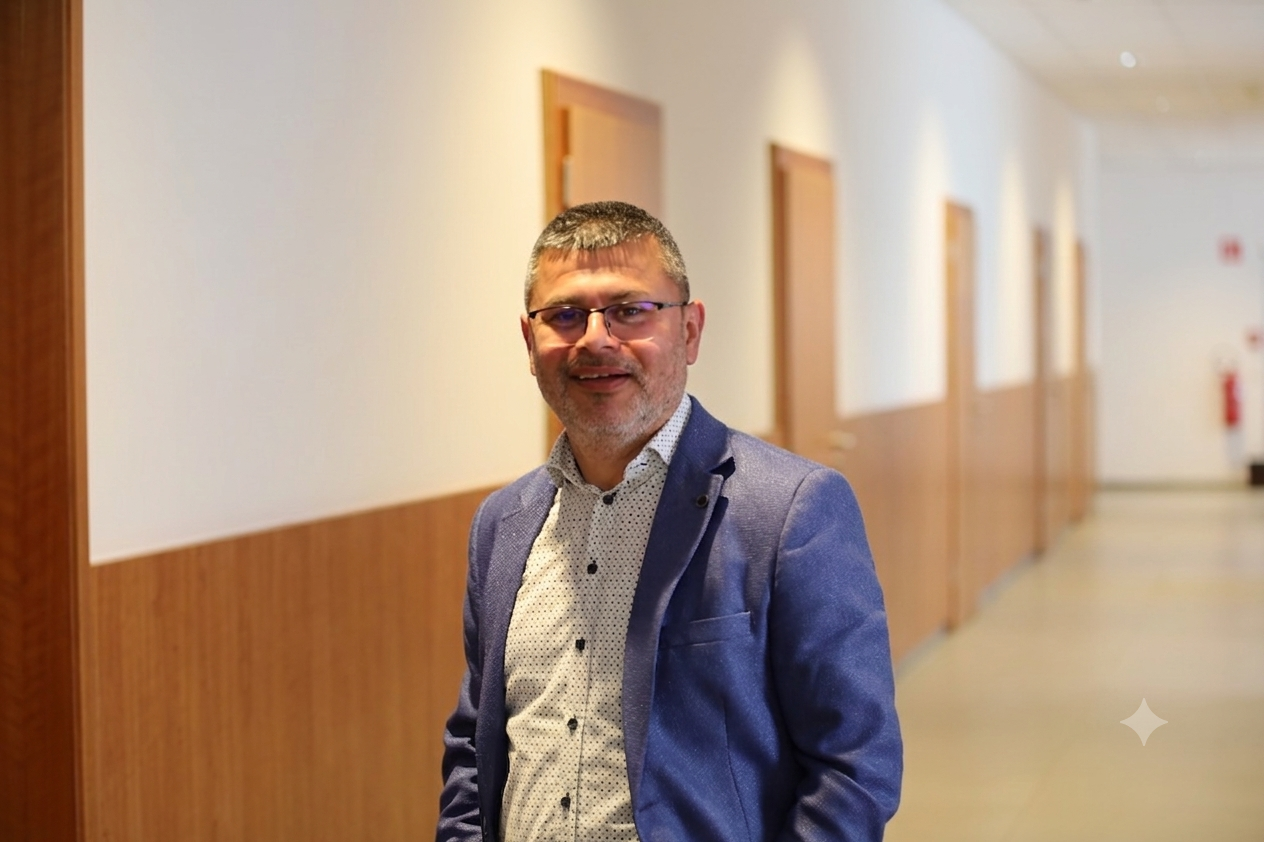
Lawyers for Lawyers is deeply concerned by the public threats issued on 4 July by Albania’s Minister of Interior against lawyer Gentian Sejrani after he relayed his client’s allegations of police abuse to the media in accordance with his professional duties and his client’s explicit instructions. These threats, which called for criminal prosecution and disciplinary proceedings, appear directly linked to Mr Sejrani’s legal representation of protesters detained during the ongoing ‘Flamingo Revolution’ demonstrations. We call on the Albanian authorities to immediately withdraw these threats and to ensure Mr Sejrani can carry out his professional duties without fear of reprisal.
Background
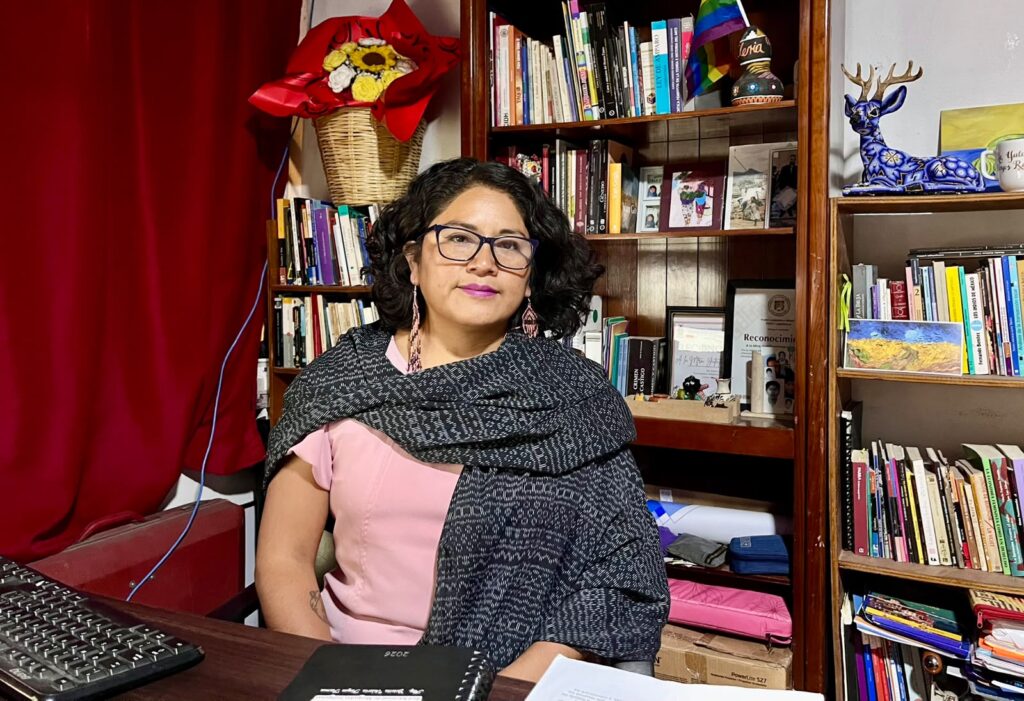
Gentian Sejrani is an Albanian public interest lawyer and the Executive Director of Drejtësi Sociale (Social Justice), a non-profit organisation that provides legal aid to marginalised and vulnerable individuals and communities in Albania. Since the outbreak of the “Flamingo Revolution” protests, which began as demonstrations against a large-scale infrastructure project over its alleged environmental impact and evolved into a broader anti-corruption movement, he has represented numerous young people and other individuals arrested or detained by the police.
According to information received, Mr Sejrani’s client was apprehended on 2 July 2026 while participating in protests before the Albanian Parliament in Tirana, when he reportedly suffered an epileptic seizure and was taken by ambulance for emergency treatment before being transferred to Police Station No.1. During a subsequent legal consultation, which took place in conditions that did not fully ensure lawyer–client confidentiality because of inadequate facilities, the client informed Mr Sejrani that he had been physically and sexually abused in custody and displayed visible signs of injury. Acting on his client’s explicit instructions, Mr Sejrani conveyed these allegations to the media and called on the People’s Advocate (Ombudsman) and the Albanian Helsinki Committee to immediately investigate the allegations.
Minister of Interior’s public threats
In response, Albania’s Minister of Interior, Besfort Lamallari, published a statement on social media (Facebook, 4 July 2026) dismissing the allegations publicly raised by Mr Sejrani as ‘unfounded’ and warning of criminal and disciplinary consequences. He stated that, should police investigations reach the same conclusion, it would be the ‘right and duty’ of the State police to initiate criminal proceedings against Mr Sejrani for allegedly ‘inciting hatred’, and to request that the National Chamber of Advocacy review his actions for suspected ethical and professional misconduct – with potential consequences for his licence to practise law. Following the Minister’s statement, Mr Sejrani has been the target of numerous defamatory and abusive attacks on social media. Investigations into the client’s allegations of abuse have reportedly been opened by both the People’s Advocate (Ombudsman) and the Police Oversight Agency; neither has issued findings to date.
The Minister’s statements raise concerns that Mr Sejrani is being targeted because of his professional activities and his association with clients or causes viewed critically by the authorities. The Albanian Helsinki Committee, together with 23 other civil society organisations, expressed similar concerns and called for an independent investigation into the alleged ill-treatment. This case arises against the backdrop of broader concerns about the authorities’ response to public criticism, protest, and freedom of expression.
International standards on the legal profession and lawyers’ right to freedom of expression
The independence of the legal profession and lawyers’ ability to carry out their professional duties free from any form of intimidation is paramount to the protection of human rights and the rule of law. The UN Basic Principles on the Role of Lawyers provide that lawyers must be able to perform their professional functions without intimidation, hindrance, harassment or improper interference (Principle 16), and must not be identified with their clients or their clients’ causes as a result of discharging their professional duties (Principle 18). These standards are also reflected in the Committee of Ministers Recommendation (2000)21 on the freedom of exercise of the profession of lawyer and the Council of Europe Convention for the Protection of the Profession of Lawyer (‘Luxembourg Convention’), which Albania signed on 15 June 2026.
Under international law and standards, lawyers, like other individuals, enjoy the right to freedom of expression, including in regard to their professional role. Protection of lawyers’ right to freedom of expression is not only important to the individuals in question. It also serves to safeguard the important public function played by lawyers in a democratic society to comment on matters related to the rule of law and the administration of justice. This right is guaranteed under Article 19 of the International Covenant on Civil and Political Rights (ICCPR) and Article 10 of the European Convention on Human Rights (ECHR), to both of which Albania is party.
The European Court of Human Rights has consistently affirmed that lawyers are entitled to comment publicly on the administration of justice and to speak in defence of their clients’ interests beyond the courtroom, provided such statements are made in good faith and remain within legitimate professional bounds.[1] This is reflected in Article 7 of the Luxembourg Convention, which expressly guarantees the right of lawyers ‘to inform the public about matters relating to the cases of their clients’.
Lawyers for Lawyers considers that the Albanian Minister’s public threat of criminal prosecution and disciplinary sanctions, issued in direct response to Mr Sejrani discharging his protected professional functions, appears incompatible with Albania’s obligations under these instruments — particularly in light of Albania’s own recent, express commitment to the Luxembourg Convention.
Recommendations
We therefore call on the Albanian authorities to:
- Publicly and unambiguously withdraw the threats made by the Minister of Interior against lawyer Gentian Sejrani;
- Refrain from any criminal, disciplinary, or administrative action against Mr Sejrani in connection with his legitimate exercise of his professional duties;
- Ensure that the National Chamber of Advocacy in Albania can exercise its self-governing functions independently and free from political interference;
- Guarantee, in law and practice, the rights and protections set out in the Council of Europe Convention for the Protection of the Profession of Lawyer, consistent with Albania’s recent commitment to that instrument.
Donwload the PDF version of the statement.
[1] Notably in Morice v. France [GC], Mor v. France, and Nikula v. Finland.