Dutch version available below, or download the PDF here.
To mark World Environment Day (5 June), we look back on a milestone in our Environmental Lawyers Campaign. In March 2026, alongside six partner organisations, Lawyers for Lawyers filed an amicus curiae brief before the African Court on Human and Peoples’ Rights Advisory Opinion proceedings concerning state obligations with regard to the climate crisis. The aim? Legal recognition and better protection for those who risk their own safety daily in defence of the environment.
In the crosshairs
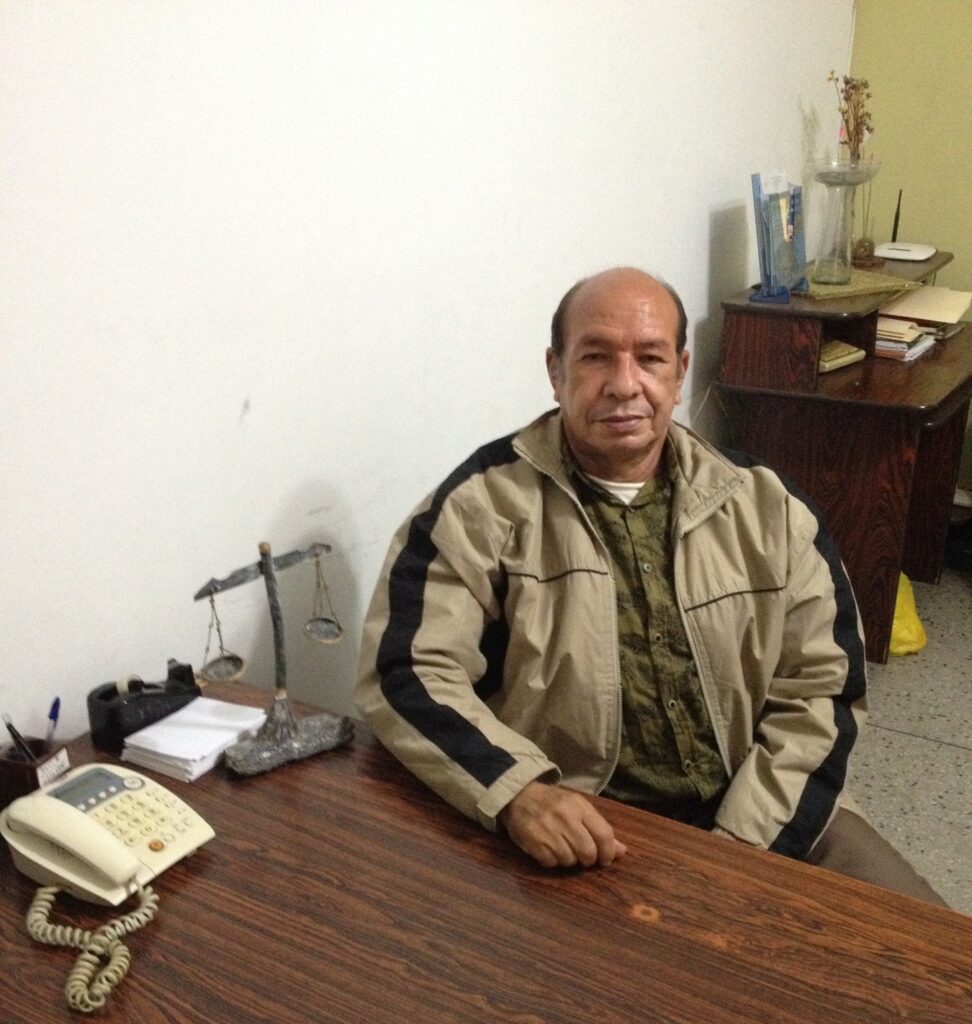
In January 2025, Ugandan military authorities physically assaulted and detained prominent human rights lawyer Eron Kiiza whilst attempting to represent his client in a military court, subsequently sentencing him to nine months in prison for “contempt of court”. As lead defence counsel who routinely represents activists opposing the construction of the 1.443 km East Africa Crude Oil Pipeline (EACOP), running through vulnerable nature reserves in Uganda and Tanzania, Kiiza has long been a target of state harassment. His story is just one of many. Worldwide, so-called Environmental Human Rights Defenders (EHRDs) face intimidation, arbitrary arrest and detention, stigmatisation and violence. These are the people who stand up for clean water, fertile soil and a liveable future. And precisely because they do so, they are regarded as a threat.
The widespread and systematic nature of this pattern is evident from a recent report by the American Bar Association Centre for Human Rights. Based on more than 25 criminal cases documented by amicus co-author Youth for Green Communities between 2022 and 2025, the report concludes that Ugandan authorities systematically use the criminal justice system to suppress peaceful environmental protests: from mass, arbitrary arrests and vague colonial-era criminal definitions to prolonged pre-trial detention and the repeated misuse of the criminal justice process as a deterrent. A recent escalation serves as an illustration: in April 2026, eight activists from the so-called ‘Stanbic 12’[1] were sentenced to eleven months’ imprisonment for participating in a peaceful protest. It is exactly these developments, in Uganda and beyond, lend urgency to our amicus brief.
A historic opportunity
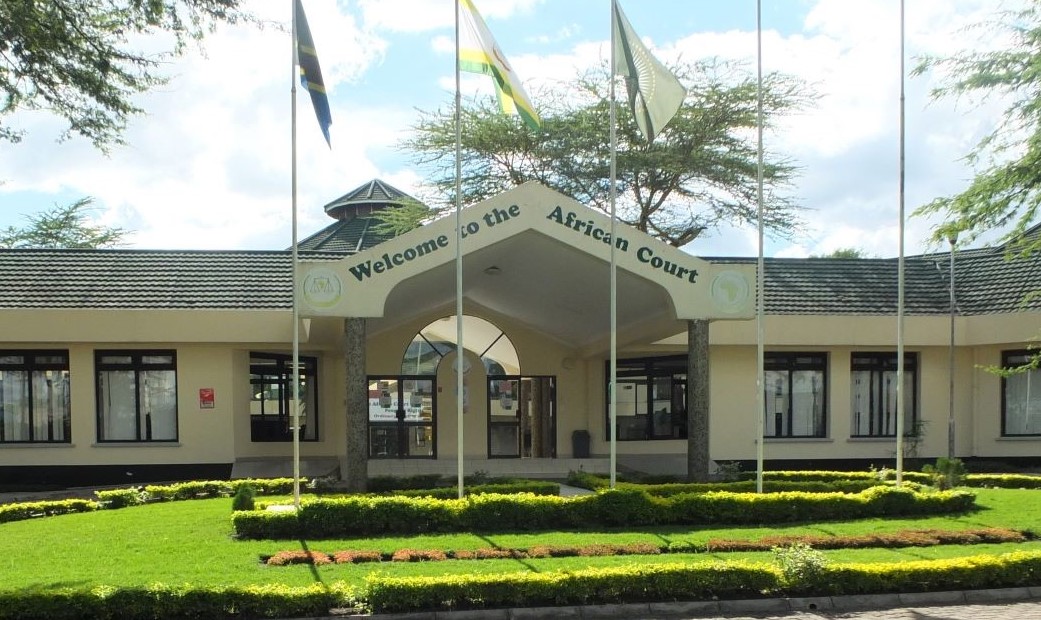
In May 2025, the Pan African Lawyers Union, together with a broad coalition of civil society organisations, submitted a request to the African Court on Human and Peoples’ Rights (ACtHPR) for an advisory opinion on states’ obligations regarding the climate crisis. This was a historic moment, as it was the first time the African human rights system had been explicitly asked to reflect on the legal implications of climate change and on the legal position of those resisting it.
The request is part of a broader international trend. Previously, states and organisations have turned to the International Court of Justice, the Inter-American Court of Human Rights and the International Tribunal for the Law of the Sea with similar questions. The ACtHPR, which has 34 member states, each facing major climate challenges, now has the opportunity to make its own contribution to this growing body of climate jurisprudence. The African Charter on Human and Peoples’ Rights (the Charter) provides an important foundation for this: it contains an explicit right to a satisfactory environment (article 24) and, unlike most other human rights treaties, does not provide in derogation from its provisions. This means that states cannot suspend their obligations, even in times of crisis.
‘Friend of the Court’
Together with six partner organisations, Lawyers for Lawyers submitted an amicus curiae brief on 29 March 2026. An amicus curiae brief enables organisations that are not direct parties to the proceedings to provide the court with specific expertise and arguments that might otherwise go unaddressed. The brief was co-authored by the Africa Institute for Energy Governance (Uganda), the Congolese Alert for the Environment and Human Rights, the Legal and Human Rights Centre (Tanzania), Youth for Green Communities (Uganda), the Zimbabwe Environmental Law Organisation, and barristers of the Bar Human Rights Committee of England and Wales. Students from the Radboud Law Clinic contributed by providing legal research support. Both they and their project leader, lecturer and PhD candidate Sandra Arntz, describe this project and the collaboration with Lawyers for Lawyers as an inspiring and rewarding experience.
The amicus brief is structured around three pillars. First, it argues that African states have positive obligations under the Charter to actively protect EHRDs: it is not enough for states to refrain from violations themselves; they must also take active measures when third parties cause harm and must create an environment in which EHRDs can work freely. Second, the amicus asks the ACtHPR to recognise that EHRDs, as a vulnerable group, are entitled to a special duty of protection, comparable to the recognition given by the Inter-American Court in its climate advisory opinion of May 2025. Third, the letter emphasises the right to participation: EHRDs and indigenous communities must be meaningfully involved in climate decisions, including the right to free, prior and informed consent regarding projects that affect their living environment.
Mapping the risks
The report ‘Roots of Resistance’ by Global Witness, an international research and advocacy group, reveals that at least 125 land and environmental defenders were killed in Africa between 2012 and 2024. In the Democratic Republic of Congo alone, nine activists, journalists and lawyers who were standing up for their environment lost their lives in 2024. According to Youth for Green Communities, a Ugandan youth-led organisation committed to sustainable environmental management for socio-economic development, the number of arrests of EACOP opponents in Uganda rose from 129 in August 2024 to over 200 in November 2025. In addition to physical violence, EHRDs are systematically criminalised through vague legislation and portrayed as “enemies of the state” or “foreign agents”. For instance, environmental lawyers are labelled “anti-national” in the media, and community leadings challenging the oil pipeline are prevented from accessing legal aid. EHRDs are also increasingly targeted by SLAPPS, strategic lawsuits designed to silence them through legal proceedings and costs.
From Arnhem to Arusha
An important contribution to the amicus brief came from the law firm Nysingh, one of the partner firms of Lawyers for Lawyers. Esther Ceulen, Jelle Cosijnse, and Diana Gunckel, full of enthusiasm but without any specific prior knowledge of African (environmental) law, delved into African legislation and case law together with the students of the Radboud Law Clinic. They contributed to the legal analysis on access to justice, protection against vexatious proceedings and involvement in climate decisions. “For some communities, these lawyers and advocates are the only way for them to make their voices heard”, says Cosijnse. “They do not have the resources, knowledge or access to take their cases to court themselves. This makes it all the more crucial that these people can do their work safely.”
Gunckel describes how, for her, the project was reconnection with the core of the law: “This is about human rights and therefore touches even more on the essence of the law than the issues we deal with in our daily practice.” Her message to other Dutch lawyers is clear: “The law does not stop at borders. You can make an effective and substantial contribution to just legal systems, even outside the Netherlands. As a lawyer, you are trained to argue, read, write, and analyse. You can put those skills to use here too.”
More than a legal ruling
The ACtHPR’s advisory opinion is expected to be issued in 2026 or 2027. Although it is not legally binding, it may influence national legal systems, future court cases and climate legislation across the continent. Furthermore, it offers an African perspective in a debate that has so far been heavily dominated by Western legal frameworks.
Aryampa Brighton, Chief Executive with Youth for Green Communities, underscores the stakes of this moment: “”Environmental human rights defenders in Uganda continue to face arrests, intimidation, criminalisation and violence simply for exercising their fundamental rights and protecting their communities. It is not an isolated case but rather a pattern. The African Court has a critical opportunity to establish a robust protection framework that not only safeguards defenders at risk but also reinforces a new position that defending human rights and the environment is not a crime but rather an obligation on every citizen to defend their right to a clean and healthy environment”.
For Lawyers for Lawyers, the implications are clear EHRDs cannot work safely and effectively, the climate struggle loses its most essential actors. With this amicus brief, Lawyers for Lawyers and its partners call on the ACtHPR to explicitly establish that states have an active duty to protect those who stand up for a liveable planet. It is a call to do justice to their indispensable yet under-recognised and imperilled role in the fight for climate justice.
Read the full submission here.
In May 2022, Lawyers for Lawyers launched the Environmental Lawyers Campaign, aimed at raising awareness of the threats faced by environmental lawyers worldwide and providing practical support. Want to know more? See: https://www.lawyersforlawyers.org/campaigns/environmental-lawyers-campaign/.
[1] De ‘Stanbic 12’ is a group of environmental activists that opposes the Stanbic Bank’s financing of EACOP.
Dutch version
Onmisbaar, maar bedreigd: de rol van milieurechtverdedigers en hun advocaten in de aanpak van de klimaatcrisis
Ter gelegenheid van World Environment Day (5 juni) blikken wij in dit artikel terug op een mijlpaal uit onze Environmental Lawyers Campaign. In maart 2026 diende Lawyers for Lawyers samen met zes partnerorganisaties een amicusbrief in bij het Afrikaanse Hof voor de Rechten van de Mens in de lopende adviesprocedure aangaande de verplichtingen van staten in de context van de klimaatcrisis. Het doel? Juridische erkenning en betere bescherming voor de mensen die dagelijks hun eigen veiligheid riskeren ter verdediging van het milieu.
Op eigen risico
In januari 2025, mishandelden en arresteerden Oegandese militairen de vooraanstaande mensenrechtenadvocaat Eron Kiiza toen hij zijn cliënt probeerde te vertegenwoordigen in een militaire rechtbank. Hij werd vervolgens veroordeeld tot negen maanden gevangenisstraf wegens ‘minachting van het hof’. Als raadsman die regelmatig activisten bijstaat die zich verzetten tegen de aanleg van de East Africa Crude Oil Pipeline (EACOP) – een 1443 km lange pijplijn die dwars door kwetsbare natuurgebieden in Uganda en Tanzania loopt – is Kiiza al langer doelwit van intimidatie door de staat. Zijn verhaal is slechts één van velen. Wereldwijd worden zogenoemde Environmental Human Rights Defenders (EHRDs) geconfronteerd met intimidatie, willekeurige arrestatie en detentie, stigmatisering en geweld. Het zijn de mensen die opkomen voor schoon water, vruchtbare grond en een leefbare toekomst. En juist omdat ze dat doen, worden ze als gevaar beschouwd.
Hoe wijdverbreid en systematisch dit patroon is, blijkt uit een recent rapport van de American Bar Association Center for Human Rights. Op basis van meer dan 25 strafzaken, gedocumenteerd door amicus-partner Youth for Green Communities tussen 2022 en 2025, concludeert het rapport dat Oegandese autoriteiten het strafrecht structureel inzetten om vreedzaam milieuprotest te onderdrukken: van massale, willekeurige arrestaties en vage koloniale delictsomschrijvingen tot langdurige voorlopige hechtenis en herhaald misbruik van het strafproces als afschrikmiddel. Een recente escalatie ter illustratie: in april 2026 werden acht activisten van de zogeheten ‘Stanbic 12’[1] veroordeeld tot elf maanden gevangenisstraf voor deelname aan een vreedzame protestactie. Het zijn precies deze ontwikkelingen, zowel in Oeganda als daarbuiten, die onze amicusbrief urgentie geven
Een historische kans
In mei 2025 diende de Pan African Lawyers Union, samen met een brede coalitie maatschappelijk middenveld, een verzoek in bij het Afrikaanse Hof voor de Rechten van de Mens (het Afrikaanse Hof) voor een advies over de verplichtingen van staten ten aanzien van de klimaatcrisis. Een historisch moment omdat het Afrikaanse mensenrechtensysteem voor het eerst expliciet werd gevraagd te reflecteren op de juridische gevolgen van klimaatverandering en op de rechtspositie van degenen die zich daartegen verzetten.
Het verzoek past in een bredere internationale trend. Eerder wendden staten en organisaties zich tot het Internationaal Gerechtshof, het Inter-Amerikaans Hof voor de Rechten van de Mens en het Internationaal Zeerechttribunaal met vergelijkbare vragen. Het Afrikaanse Hof, dat 34 lidstaten telt die ieder voor grote klimaatuitdagingen staan, krijgt nu de kans een eigen bijdrage te leveren aan deze groeiende klimaatjurisprudentie. Het Afrikaans Handvest voor de Rechten van de Mens en Volkeren (het Handvest) biedt daarvoor een belangrijk fundament: het bevat een expliciet recht op een bevredigend leefmilieu (artikel 24) en kent, anders dan de meeste andere mensenrechtenverdragen, geen derogatieregeling. Dit betekent dat staten hun verplichtingen niet kunnen opschorten, ook niet in tijden van crisis.
‘Vriend van de rechtbank’
Samen met zes partnerorganisaties diende Lawyers for Lawyers op 29 maart 2026 een amicus curiae in. Een amicusbrief stelt organisaties buiten de directe procespartijen in staat het Hof te voorzien van bepaalde expertise en argumentatie die anders mogelijk onbelicht blijven. De brief werd mede opgesteld door het Africa Institute for Energy Governance (Oeganda), de Congolese Alert for the Environment and Human Rights, de Legal and Human Rights Centre (Tanzania), Youth for Green Communities (Oeganda), de Zimbabwe Environmental Law Organisation en de Bar Human Rights Committee of England and Wales. Ondersteuning met juridisch onderzoek werd geleverd door studenten van de Radboud Law Clinic. Zowel zij als hun projectleider, docent-promovendus Sandra Arntz, beschrijven dit project en de samenwerking met Lawyers for Lawyers als een inspirerende en verrijkende ervaring.
De amicus is opgebouwd rond drie pijlers. Ten eerste wordt beargumenteerd dat Afrikaanse staten op grond van het Handvest positieve verplichtingen hebben om EHRDs actief te beschermen: het is niet voldoende dat staten zelf afzien van schendingen, zij moeten ook actief optreden wanneer derden schade toebrengen, en moeten een omgeving scheppen waarin EHRDs vrijelijk kunnen werken. Ten tweede vraagt de brief het Hof te erkennen dat EHRDs als kwetsbare groep recht hebben op een bijzondere beschermingsplicht, vergelijkbaar met de erkenning die het Inter-Amerikaans Hof in zijn klimaat-advies van mei 2025 gaf. Ten derde benadrukt de brief het recht op participatie: EHRDs en inheemse gemeenschappen moeten zinvol worden betrokken bij klimaatbeslissingen, inclusief het recht op vrije, voorafgaande en geïnformeerde instemming bij projecten die hun leefomgeving raken.
De gevaren in kaart
Uit het rapport ‘Roots of Resistance van Global Witness, een internationale onderzoeks- en actiegroep, blijkt dat tussen 2012 en 2024 ten minste 125 milieuverdedigers zijn gedood in Afrika. In de Democratische Republiek Congo alleen al kwamen in 2024 negen activisten, journalisten en advocaten die opkwamen voor hun leefomgeving om het leven. Volgens Youth for Green Communities, een door Oegandese jongeren geleide organisatie die zich inzet voor duurzaam beheer van het milieu ten behoeve van sociaaleconomische ontwikkeling, liep het aantal arrestaties van EACOP-tegenstanders in Uganda op van 129 in augustus 2024 tot meer dan 200 in november 2025. Naast fysiek geweld worden EHRDs systematisch gecriminaliseerd via vage wetgeving en neergezet als “vijanden van de staat” of “buitenlandse agenten”. Zo worden milieurechtadvocaten in de media betiteld als “antinationaal” en worden gemeenschapsleiders die de oliepijplijn betwisten verhinderd toegang te krijgen tot rechtsbijstand. Ook worden EHRDs steeds vaker het doelwit van SLAPPs, strategische rechtszaken bedoeld om hen met procedures en kosten het zwijgen op te leggen.
Van Arnhem naar Arusha
Een belangrijke bijdrage aan de amicus kwam van het advocatenkantoor Nysingh, één van de partnerkantoren van Lawyers for Lawyers. Esther Ceulen, Jelle Cosijnse en Diana Gunckel doken, vol enthousiasme maar zonder enige specifieke voorkennis van Afrikaans (milieu)recht, samen met de studenten van de Radbouw Law Clinic, de Afrikaanse wetgeving en rechtspraak in. Zij werkten mee aan de juridische analyse over toegang tot de rechter, bescherming tegen vexatoire procedures en betrokkenheid bij klimaatbeslissingen. “Voor sommige bevolkingsgroepen zijn deze advocaten en belangenbehartigers de enige manier om hun stem te laten horen”, aldus Cosijnse. “Zij hebben niet de middelen, kennis of toegang om zelf naar de rechter te stappen. Des te crucialer dat deze mensen hun werk veilig kunnen doen.”
Gunckel beschrijft dat voor haar het project een herverbinding was met de kern van het recht: “Dit gaat over mensenrechten, en raakt daarom nog meer de essentie van het recht dan de vraagstukken die wij in onze dagelijkse praktijk behandelen.” Haar boodschap aan andere Nederlandse advocaten is helder: “Recht houdt niet op bij de grenzen. Je kunt effectief en substantieel bijdragen aan rechtvaardige rechtssystemen, ook buiten Nederland. Als advocaat ben je getraind om te argumenteren, te lezen, te schrijven en te analyseren. Die vaardigheden kun je hier ook inzetten.”
Meer dan een juridisch oordeel
De adviesopinie van het Afrikaanse Hof wordt naar verwachting in 2026 of 2027 uitgebracht. Hoewel deze juridisch niet bindend is, kan ze wel doorwerken in nationale rechtsstelsels, toekomstige rechtszaken en klimaatwetgeving op het continent. Bovendien biedt ze een Afrikaans perspectief in een debat dat tot nu toe sterk is gedomineerd door westerse juridische kaders.
Aryampa Brighton, Chief Executive van Youth for Green Communities, benadrukt wat er op dit moment op het spel staat: „Milieurechtenbeschermers in Oeganda worden voortdurend geconfronteerd met arrestaties, intimidatie, criminalisering en geweld, simpelweg omdat zij hun grondrechten uitoefenen en hun gemeenschappen beschermen. Dit is geen opzichzelfstaand incident, maar een patroon. Het Afrikaans Hof heeft nu een cruciale kans om een robuust beschermingskader vast te stellen dat niet alleen bescherming biedt aan milieurechtverdedigers die risico lopen, maar ook het nieuwe standpunt bekrachtigt dat het verdedigen van mensenrechten en het milieu geen misdaad is. Het is juist een plicht van elke burger om zijn recht op een schoon en gezond milieu te verdedigen.”
Voor Lawyers for Lawyers is de inzet duidelijk: als EHRDs niet veilig en effectief kunnen werken, verliest de klimaatstrijd haar meest essentiële actoren. Met deze amicusbrief vraagtLawyers for Lawyers, samen met haar partners, het Hof om expliciet vast te stellen dat staten de actieve plicht hebben degenen die opkomen voor een leefbare planeet te beschermen. Het is een oproep om recht te doen aan hun onmisbare rol in de strijd voor klimaatrechtvaardigheid.
Lees de volledige amicusbrief hier.
Lawyers for Lawyers lanceerde in mei 2022 de Environmental Lawyers Campaign, gericht op bewustwording over de bedreigingen waarmee milieurechtadvocaten wereldwijd worden geconfronteerd en het bieden van praktische ondersteuning. Meer weten hierover? Zie: https://www.lawyersforlawyers.org/campaigns/environmental-lawyers-campaign/.
[1] De ‘Stanbic 12’ is een groep activisten die protesteert tegen de financiering van het EACOP-project door de Stanbic bank.