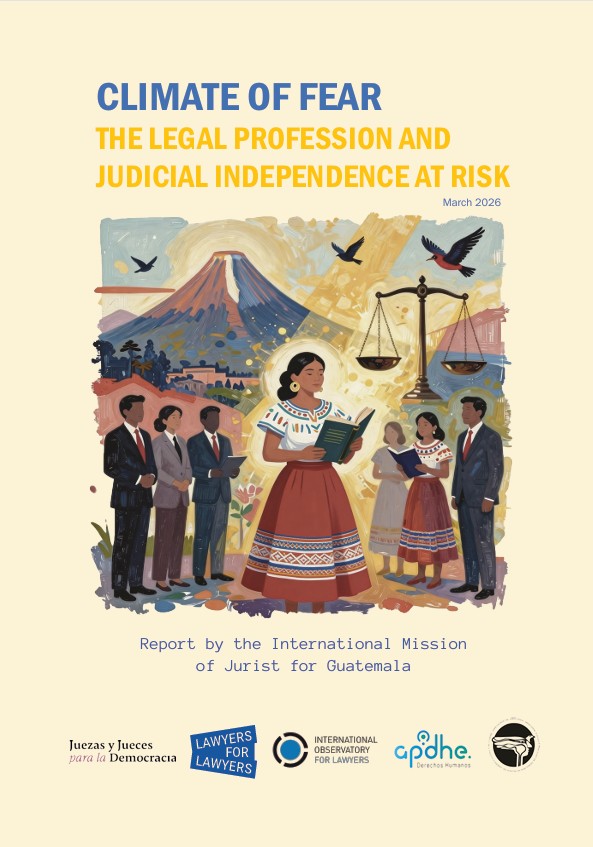
“’Crucial year’ for Guatemala”, headlined the Advocatenblad in April. In an interview with this magazine for the legal profession, Programme Officer Natalia Segura Diez talked about the fear of ‘civil death’ amongst lawyers in Guatamala. The interview follows on the report Climate of Fear: the legal profession and judicial independence at risk. The report was published in March and is based on a fact-finding mission in Guatamala.
‘Crucial year’ for Guatemala
By Trudeke Sillevis Smitt for The Advocatenblad
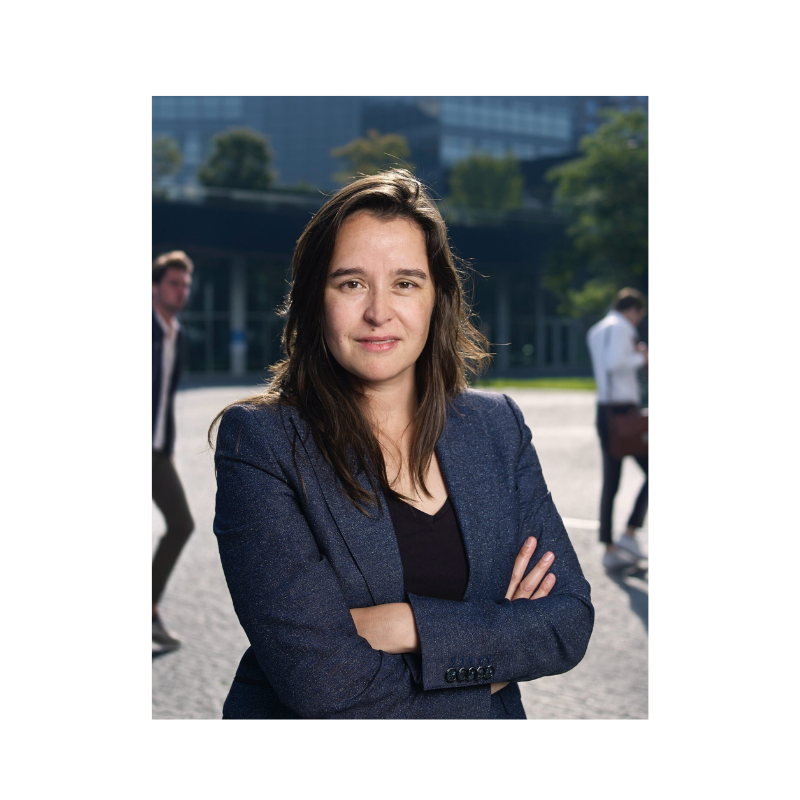
‘Civil death,’ never heard of it? It is a well-known concept among legal professionals in Guatemala, explains L4L-employee Natalia Segura Diez.
The pervasive fear – that was what struck Natalia Segura Diez most during her participation in a research mission in Guatemala. ‘Whoever we spoke to – lawyers, civil society organizations, representatives of the authorities – everyone was afraid of threats, stigmatization, smear campaigns, and above all, persecution. They spoke of ‘civil death’: if you are targeted, you can no longer participate in social and professional life. You eventually end up in prison or have to leave the country to ensure your safety.’
Segura Diez, program manager at Lawyers for Lawyers, conducted ten days of research in the Central American country together with representatives from four other international organizations. This was followed by (online) interviews with exiles in other countries. The report Climate of Fear: the legal profession and judicial independence at risk was published in March and can be found on the Lawyers for Lawyers website.
Frozen
The fear of civil death has a paralyzing effect, observed Segura Diez. ‘Our impression was that the organizations responsible for checks and balances want change, but do not dare to react, they are more or less frozen.’
This is also the case in the legal profession: ‘There are very few lawyers who still dare to stand up for human rights and against corruption. Those who do dare choose a restrained strategy: deciding not to file that request or to appeal.’
It has repercussions at the highest level. Segura Diez spoke with the Deputy Minister of Justice. ‘You could feel the fear there too. This Deputy Minister had just started, his predecessor had resigned following a crisis caused by a mass escape from a men’s prison. It led to a criminal investigation and many arrest warrants against officials at various levels.’
Good things are happening too, says Segura Diez. ‘But you cannot name them because then you put people in danger.’
Crucial Year
In recent years, many reports have appeared regarding the miserable state of the rule of law in Guatemala. In 2023, Lawyers for Lawyers presented the L4L award to Claudia González Orellana. Yet, this mission came not a day too soon, says Segura Diez. ‘This year is crucial for the rule of law. In 2026, the Constitutional Court, the Supreme Electoral Council, and the leadership of the Public Prosecution Service will be renewed. These people are elected via electoral commissions, which include various organizations. The Bar Association, for example, helps select the members of the Constitutional Court.’
This makes the Bar Association influential and, at the same time, a target of intimidation. Segura Diez: ‘We spoke with the board that has been in office since 2025. One of the candidates for this board, Eduardo Masaya, was arrested the very same day after the official announcement of the list of candidates on which his name appeared. And in February, during the election of one of the members of the Constitutional Court, the Public Prosecution Service raided polling stations of the Order. It is a weakened and politicized institution.’
Nevertheless, many lawyers Segura Diez spoke to are positive about the new board. ‘For example, they want to develop a program to support persecuted lawyers. That is still in its infancy, however; they do not have funds yet – but the intentions are good.’
Disciplinary Board
About the intentions of another body within the Order, Segura Diez has more doubts: ‘The Disciplinary Board, which operates independently of the Executive Board, is heavily criticized. They proceed expeditiously in cases against lawyers who defend human rights or raise the issue of corruption. Whereas they take no action whatsoever against lawyers who cooperate in criminalization by filing charges against colleagues.’
The fact that elections for three important institutions are being held in the same year is a coincidence, but it could be a turning point for the rule of law in Guatemala. ‘At the same time, it is a very risky moment,’ says Segura Diez. ‘Criminal law is also being used as a tool to influence elections. Lawyers we spoke to said that critical attention from the outside is therefore important.’
How does this criminalization work? The report states that indigenous people and human rights lawyers and activists are the primary targets. Accusations contain unspecified charges based on vague, broad penal provisions. In corruption cases, the Public Prosecution Service sometimes initiates ‘mirror cases’: lawyers who raise the issue of corruption are themselves accused of corruption in the same file. Once a criminal case is underway, it is suspended indefinitely. The effect is amplified by a large number of charges against the same person. In this regard, the Public Prosecution Service collaborates with a foundation, the Foundation Against Terrorism. ‘That organization consists of lawyers too,’ sighs Segura Diez.
Indigenous female lawyers are victims in threefold – discrimination plays a major role.
Guatemala, the heartland of the ancient Mayan civilization, was a Spanish colony from the sixteenth to the eighteenth century. Around 1900, foreign investors such as the United Fruit Company gained a foothold – the indigenous population paid the price (again). After a long period of coups, civil war, and massacres of the indigenous population, Guatemala officially became a democratic constitutional state in 1986; ten years later, the civil war officially ended with a peace agreement.
However, the political, economic, and military elite continued to pull the strings and even gained influence in recent years.
President Bernardo Arévalo was elected in 2024 with the promise to fight poverty and corruption, but the high expectations had to be quickly adjusted. A small but hopeful sign: the conditions of political prisoners have improved.
El pacto de corruptos
What seems to make the situation in Guatemala unique is that the ‘enemy’ is operating behind the scenes. There is no ‘wrong’ president or authoritarian party in power, but instead, there is a deep-rooted alliance between politicians, economic elites, and military leaders aimed at controlling state institutions to ensure impunity. This is known as the ‘Pacto de corruptos’.
Whether the recent L4L investigation has yielded results is difficult to measure. Segura Diez: ‘There are currently at least 157 human rights defenders in exile, 54 of whom are from the judiciary. They still face criminal trials, and the chance of them being able to return in the short term is minimal. But the difference can lie in small things. Our Award winner Claudia González Orellana, who spent over two years under house arrest after 82 days in detention, has been allowed to await her trial in freedom since January. She is convinced that international attention is responsible for this. Her criminal trial starts in May – we will be following that as well.’
The original publication is available in Dutch here.