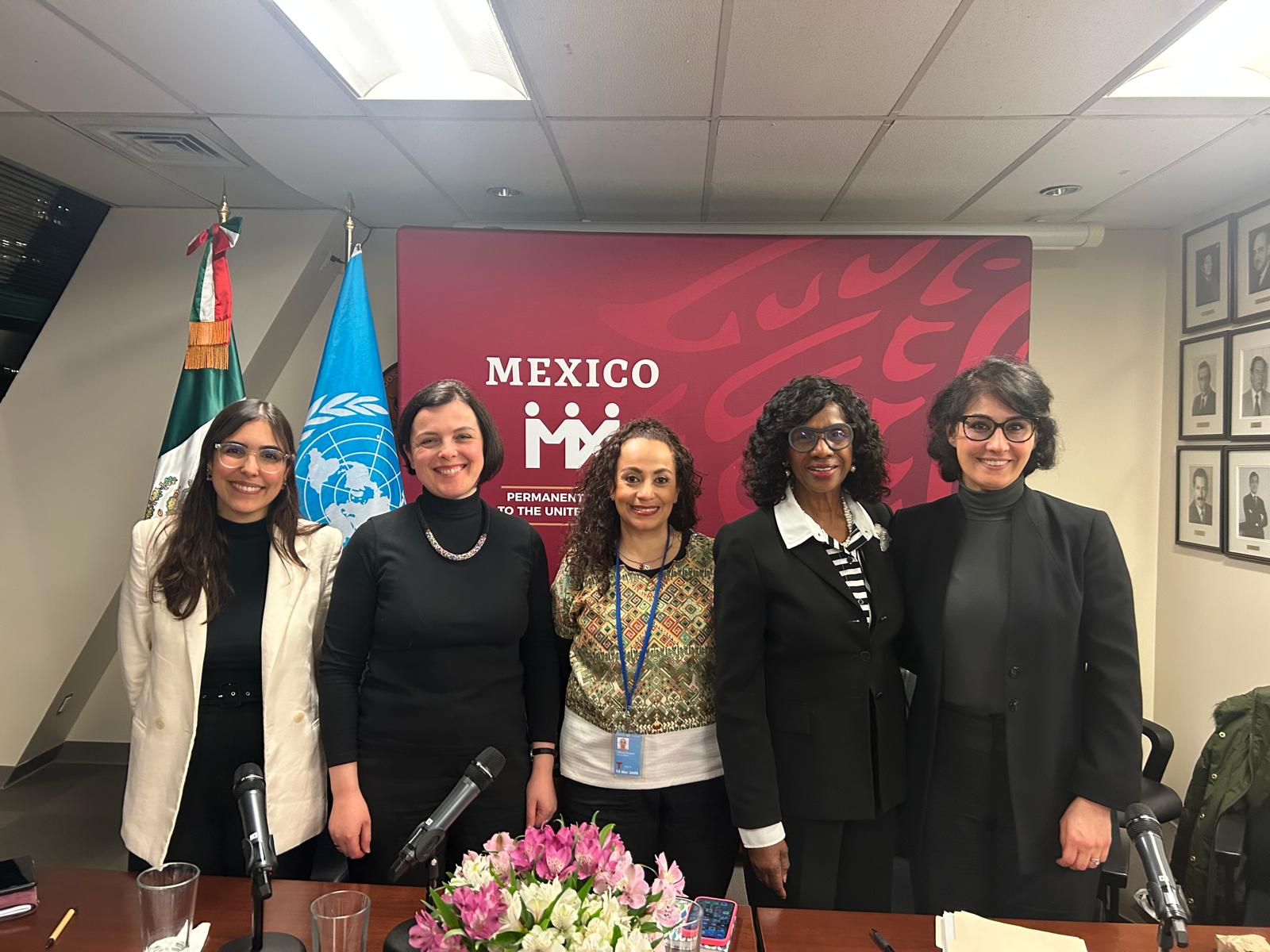
On 12 March 2026, Lawyers for Lawyers, in collaboration with its partners, hosted “Voices from the frontline: women lawyers advancing access to justice,” a side event during the 70th Commission on the Status of Women (CSW70), whose priority theme this year focused on ensuring and strengthening access to justice for all women and girls.
The event, co-sponsored by the International Bar Association Human Rights Institute (IBAHRI), the American Bar Association (ABA), and the Governments of Mexico, the Netherlands, and Canada, brought together speakers from different regions to reflect on the critical role of women lawyers in advancing justice. The discussion highlighted the systemic barriers, specific risks, and discrimination they face, while amplifying their voices and fostering collaboration to strengthen accountability and promote gender equality within the legal profession.
The event opened with remarks by Patricia Carranza Rodríguez, Director General of Intelligence, Innovation, and Strategic Planning for the Continuous Improvement of Programs at Mexico’s Ministry for Women, who presented the recently launched network of women lawyers in Mexico for free legal aid in gender based violence cases.
Khrystyna Kit, Co-founder and Chair of the Ukrainian Women Lawyers Association “Jurfem,” highlighted the specific challenges faced by lawyers working on gender-based violence cases, including threats from perpetrators, pressure from law enforcement authorities, and the significant emotional and professional burden of this work. She explained that, in response, lawyers often operate in teams to enhance their safety and provide mutual support. She also pointed to harassment from colleagues, limited access to leadership positions, and broader gender inequalities within the Ukrainian legal profession, supported by findings from a recent survey.
Shabnam Moinipour, Programme Director at the Centre for Supporters of Human Rights (CSHR), addressed the structural nature of inequality in Iran, which extends beyond formal legal frameworks. Drawing on findings from the report “No Defence: A Report on the Status of Lawyers and the Bar Associations in Iran,”[1] she described how women lawyers face continuous scrutiny in courts, discrimination in accessing high-profile cases, and exclusion from informal professional networks. “These factors create a structural environment that shapes women’s professional trajectories even before political repression is taken into account”, she noted
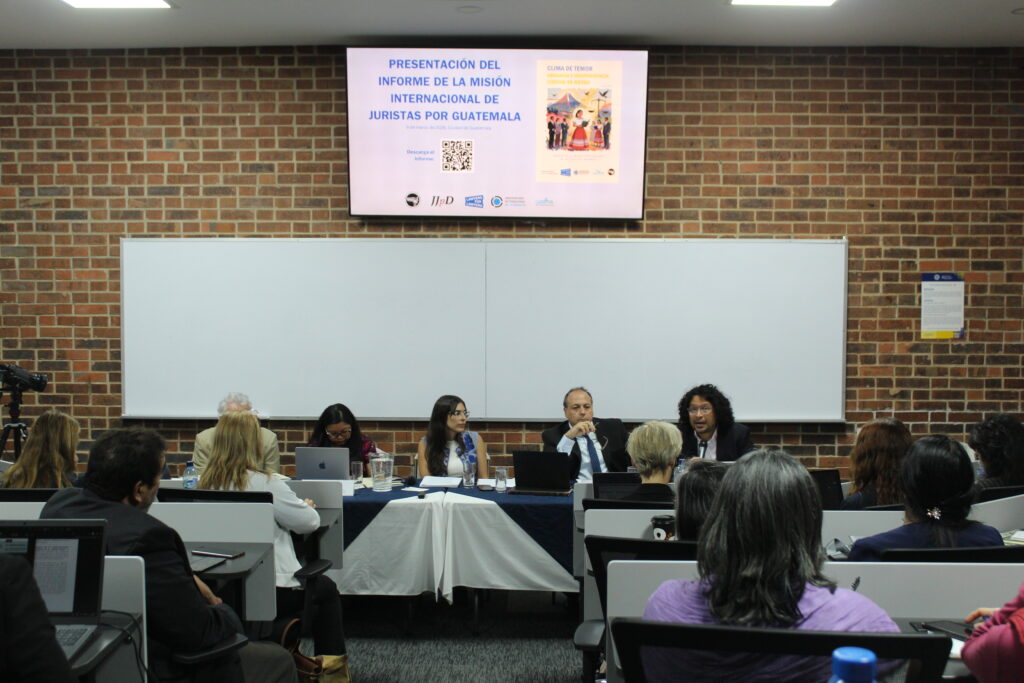
Flor de María Gálvez, a Guatemalan lawyer and former representative of the International Commission against Impunity in Guatemala (CICIG), currently in exile, highlighted the gendered nature of persecution against lawyers in Guatemala. She described patterns of digital violence, coordinated smear campaigns, and threats aimed at silencing women lawyers. As she noted, “Exile is the result of a system designed to eliminate independent voices. For women lawyers, the violence is often more intimate and humiliating, targeting us where we are most vulnerable.”
Paulette Brown, a distinguished legal leader and the first woman of color to serve as President of the American Bar Association, addressed the importance of recognising intersectionality. She emphasised that focusing on a single dimension of discrimination risks overlooking the compounded impact of multiple forms of inequality, particularly for women with different ethnic backgrounds, women with disabilities, and members of the LGBTIQ+ community.
Building on these experiences, the panelists discussed strategies to strengthen protection, support, and leadership for women lawyers.
Shabnam Moinipour stressed that because these challenges are structural, responses must also be structural. Safeguarding the independence of the legal profession remains foundational, and protection strategies must explicitly recognise gendered patterns of attacks. She also highlighted the importance of representation within bar associations and the role of international visibility in shrinking civic space: “When cases involving women lawyers at risk are documented, visibility reduces isolation and increases accountability.” She further emphasised that long-term reform must address both formal laws and informal structures, as inequality is reproduced through cultural norms, institutional practices, and professional hierarchies.
Drawing from her experience leading a women lawyers’ organisation, Khrystyna Kit underscored the importance of collective action. Networks of women lawyers not only support individual cases but also contribute to systemic change. She highlighted the value of working collaboratively, particularly in cases involving gender-based violence, and the importance of amplifying women lawyers’ voices while addressing legislative gaps through coordinated advocacy: “We unite women lawyers because we believe their voices must be louder, and it is our responsibility to identify gaps in the law and work to change them.”
Reflecting on her experience in exile, Flor de María Gálvez stressed that any process of institutional reform must incorporate a gender perspective, including guarantees of non-repetition that specifically address gender-based violence, digital harassment, and the misuse of detention as a tool of intimidation. She called for protection mechanisms for women lawyers that are concrete, adequately funded, and include psychological support, as well as stronger international accountability mechanisms. As she warned “we need the international legal community to understand that what is happening in Guatemala with women lawyers is not an anomaly, it is a model that is being replicated to silence us.”
Drawing on her experience within the American Bar Association, Paulette Brown pointed to practical steps that bar associations and law firms can take, including mandatory diversity and inclusion training and policies addressing care responsibilities, to foster a more inclusive legal profession.
In line with the CSW priority theme, the discussion reaffirmed that access to justice for women and girls depends on ensuring that women lawyers can operate freely, independently, and safely, without structural barriers. As Shabnam Moinipour concluded, “When women lawyers are constrained, justice becomes selective; when they are silenced, justice becomes fragile. Protecting them is not a matter of professional courtesy, it is a prerequisite for a fair and equitable legal system.”
[1] IBAHRI, No Defence. A Report on the Status of Lawyers and the Bar Associations in Iran, November 2025.